
Because no single breeder blanket can simultaneously maximize tritium breeding, transfer heat efficiently, and maintain long-term structural resilience, multiple design pathways have emerged. The leading concepts, solid ceramic breeders, liquid metal systems, and molten salt blankets, each take a different approach to balancing these demands. In this article, we explore how these architectures work, the advantages they offer, and the engineering challenges that define their development.
Later sections will contrast these challenges with liquid metal and molten salt breeders, which trade solid-phase diffusion issues for fluid handling and corrosion challenges
Blanket Architectures:
Solid Breeder Blankets:
Solid breeder blankets employ lithium-ceramic compounds in structured pebble beds to optimize surface area and tritium release, fig 1. The main material systems include lithium orthosilicate (Li₄SiO₄), lithium metatitanate (Li₂TiO₃), and lithium oxide (Li₂O), each offering distinct advantages. A key property is the lithium atom density, often expressed as lithium-equivalent grams per cubic centimetre, which directly affects tritium breeding performance. Among the candidates, Li₂O provides the highest lithium atom density (~0.94 g-Li/cm³), great thermal conductivity, as studies have shown thermal conductivities ranging from 2 to 10 W/m·K depending on porosity and temperature, significantly higher than other lithium ceramics, and low activation [1][2]. Unfortunately, it suffers from relatively slow tritium release at lower temperatures as well as suffering from irradiation damage from neutrons or transmutation products [1][3]. Li₄SiO₄ (~0.54 g-Li/cm³) offers balanced performance with strong thermophysical properties, with thermal conductivity typically ranging from 1.5 to 4.5 W/m·K across operational temperatures, while Li₂TiO₃ has a lower lithium atom density (~0.43 g-Li/cm³) which means less tritium can be bred from a given volume [1].
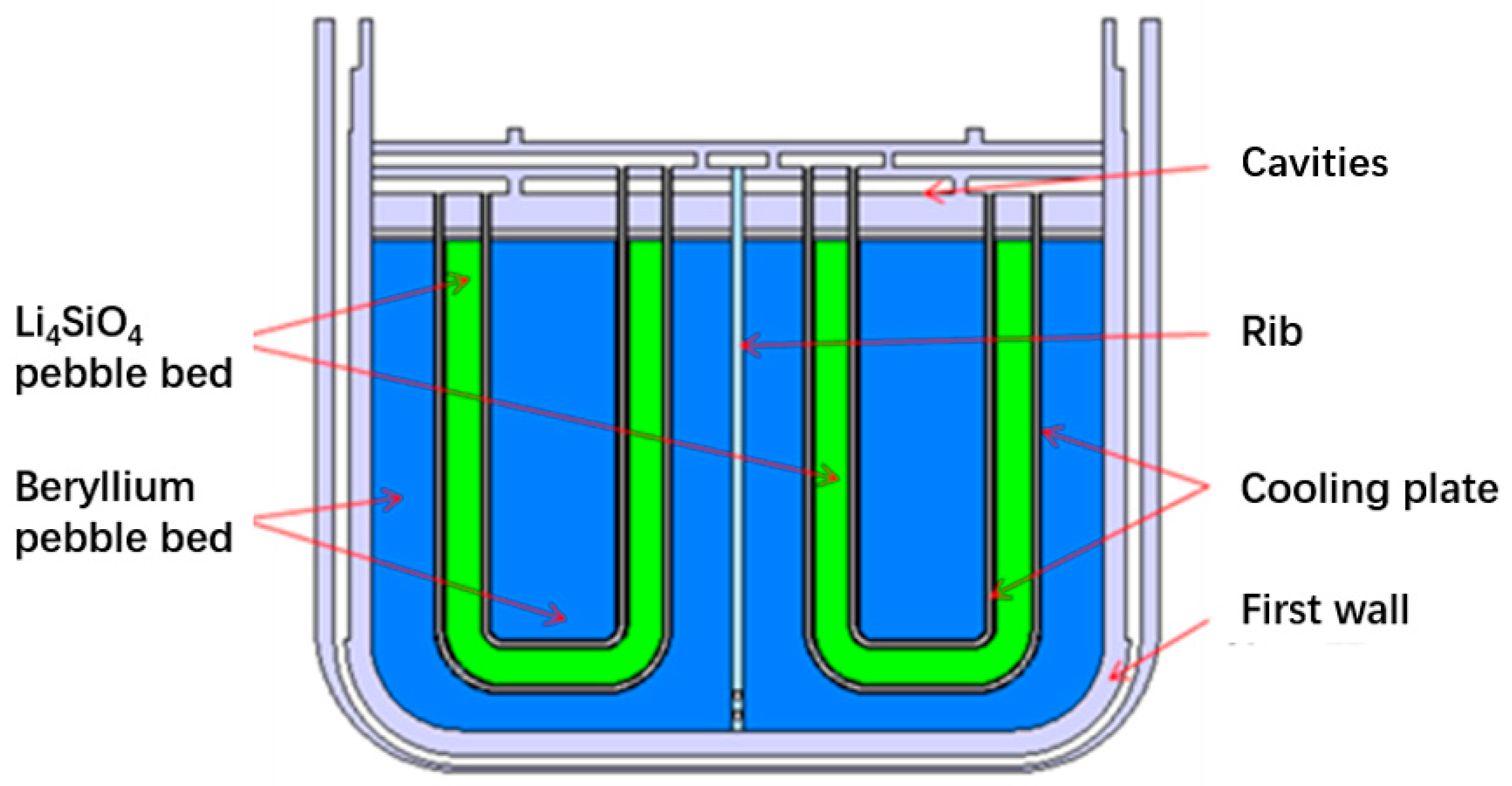
Figure 1. Schematic illustration of solid breeder blanket.
To achieve tritium self-sufficiency, solid breeder zones are often paired with neutron multipliers such as beryllium, which enhance neutron economy through (n,2n) reactions [4] . These materials are typically arranged in layered/alternating configurations within the blanket to maximize the local tritium breeding ratio while maintaining heat removal capability [5] .
Despite these strengths, solid breeders face significant challenges. Tritium produced within the ceramic material must first diffuse through the grain structure before it can be collected by the purge gas, typically helium or a helium, hydrogen mixture that continuously flows through the blanket. The purge gas sweeps released tritium (T₂ or HT) out of the breeder region and delivers it to extraction systems for recovery. Because tritium diffusion through ceramics is strongly temperature-dependent, the relatively modest operating temperatures allowed by structural steels mean that much of the tritium remains trapped within the solid phase. This raises the overall tritium inventory in the blanket and creates safety and regulatory concerns, since greater quantities of tritium must be carefully managed and extracted.
A second issue is the narrow thermal operating window of these ceramics. The breeder must be hot enough to release tritium efficiently, yet remain below the temperature limits of structural materials such as EUROFER steel to avoid damaging the pebble beds themselves. Maintaining this delicate balance across a large, actively cooled blanket is a demanding engineering task, one that places thermal management and purge gas design at the center of breeder blanket development.
Despite their complexities, solid breeder blankets remain a cornerstone of near-term fusion blanket development, particularly for European and Japanese DEMO designs. Their well-understood material behavior, compatibility with structural alloys like EUROFER, and straightforward integration with helium cooling make them attractive for early deployment. Continued research focuses on improving tritium diffusion through microstructural engineering, such as grain boundary tailoring, dopant addition, and pebble surface coatings, to accelerate tritium release and lower inventory. Advances in high-temperature steels and purge gas optimization may further expand the viable operating window, bringing solid breeders closer to the performance and safety thresholds required for sustained tritium self-sufficiency in fusion reactors.
References:
[1]Donato, A. (1998) ‘A critical review of LI2O ceramic breeder material properties correlations and data’, Fusion Engineering and Design, 38(4), pp. 369–392. doi:10.1016/s0920-3796(97)00123-3.
[2]Abou-Sena, A., Ying, A. and Abdou, M. (2005) ‘Effective thermal conductivity of lithium ceramic pebble beds for fusion blankets: A Review’, Fusion Science and Technology, 47(4), pp. 1094–1100. doi:10.13182/fst05-3.
[3]Munakata, K. et al. (2001) ‘Tritium release from catalytic breeder materials’, Fusion Engineering and Design, 58–59, pp. 683–687. doi:10.1016/s0920-3796(01)00530-0.
[4]Hernández, F.A. and Pereslavtsev, P. (2018) ‘First Principles Review of options for tritium breeder and neutron multiplier materials for breeding blankets in fusion reactors’, Fusion Engineering and Design, 137, pp. 243–256. doi:10.1016/j.fusengdes.2018.09.014.
[5]Abdou, M. et al. (2015) ‘Blanket/first wall challenges and required R&D on the pathway to demo’, Fusion Engineering and Design, 100, pp. 2–43. doi:10.1016/j.fusengdes.2015.07.021.
Figure 1:
Hu, B. et al. (2024) ‘Holistic hydraulic simulation for pebble bed using porous media approach’, Energies, 17(14), p. 3562. doi:10.3390/en17143562.